

India Orthopedic Implant Market Report 2026 Edition
Introduction: Why Orthopedic Health Is India’s Next Public Health Priority
India is growing at a rapid rate—yet its bones and joints are straining like never before.
Whether it is the 63-year-old farmer with a case of advanced knee osteoarthritis or the 28-year-old IT professional with a chronic lower back disorder, orthopedic disorders have become more familiar across all age groups.
More than 180 million Indians now have some kind of joint problem. This is more people than the number of European countries taken together.
Whether you are:
- a patient searching for a trusted orthopedic surgeon in Kolkata.
- a researcher studying India’s orthopedic health landscape.
- a clinician interested in treatment trends and care standards.
This is your reference book for 2026.
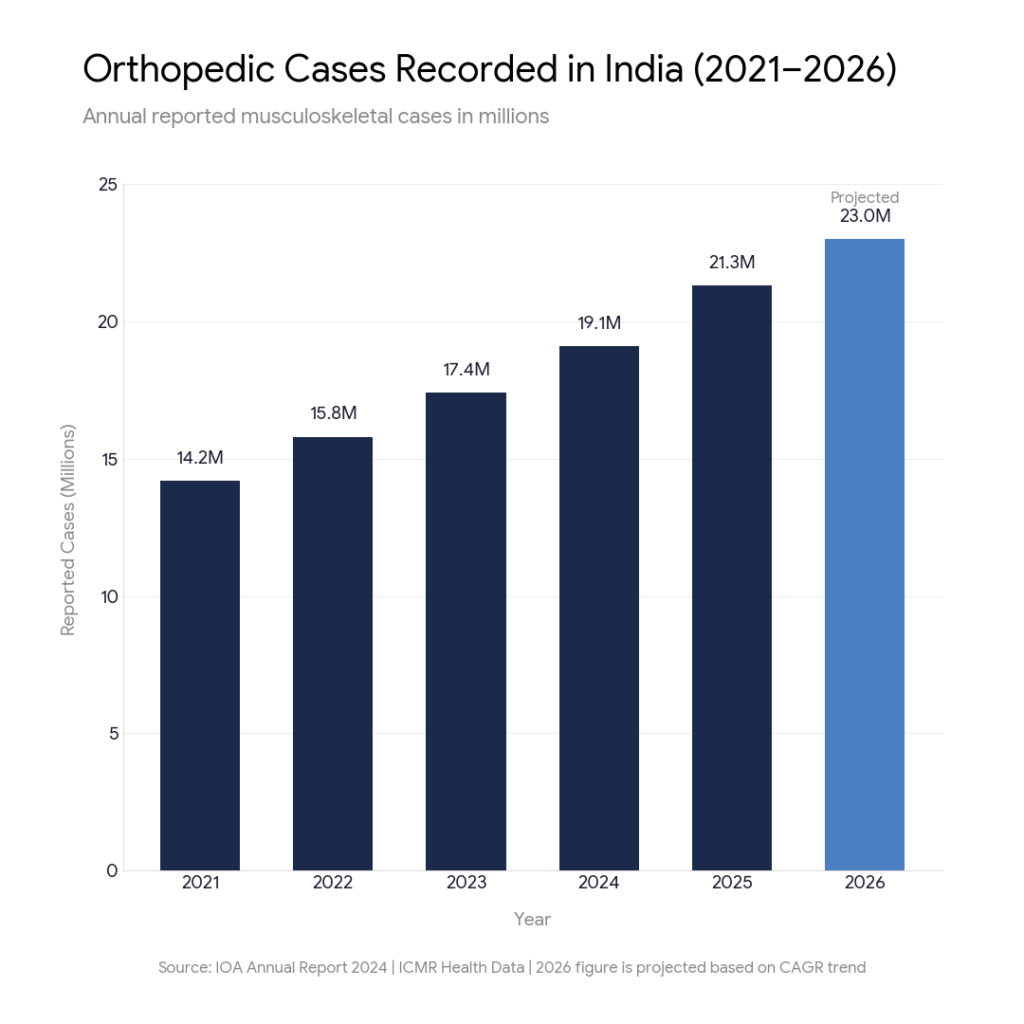
India’s Orthopedic Market in 2026: Data You Need to Know
There is a structural change in the orthopedic health ecosystem in India due to three concomitant factors:
- A fast-growing aging population.
- An explosion of lifestyle-related musculoskeletal disorders.
- A government initiative of pushing medical device production to India as part of the Make in India initiative.
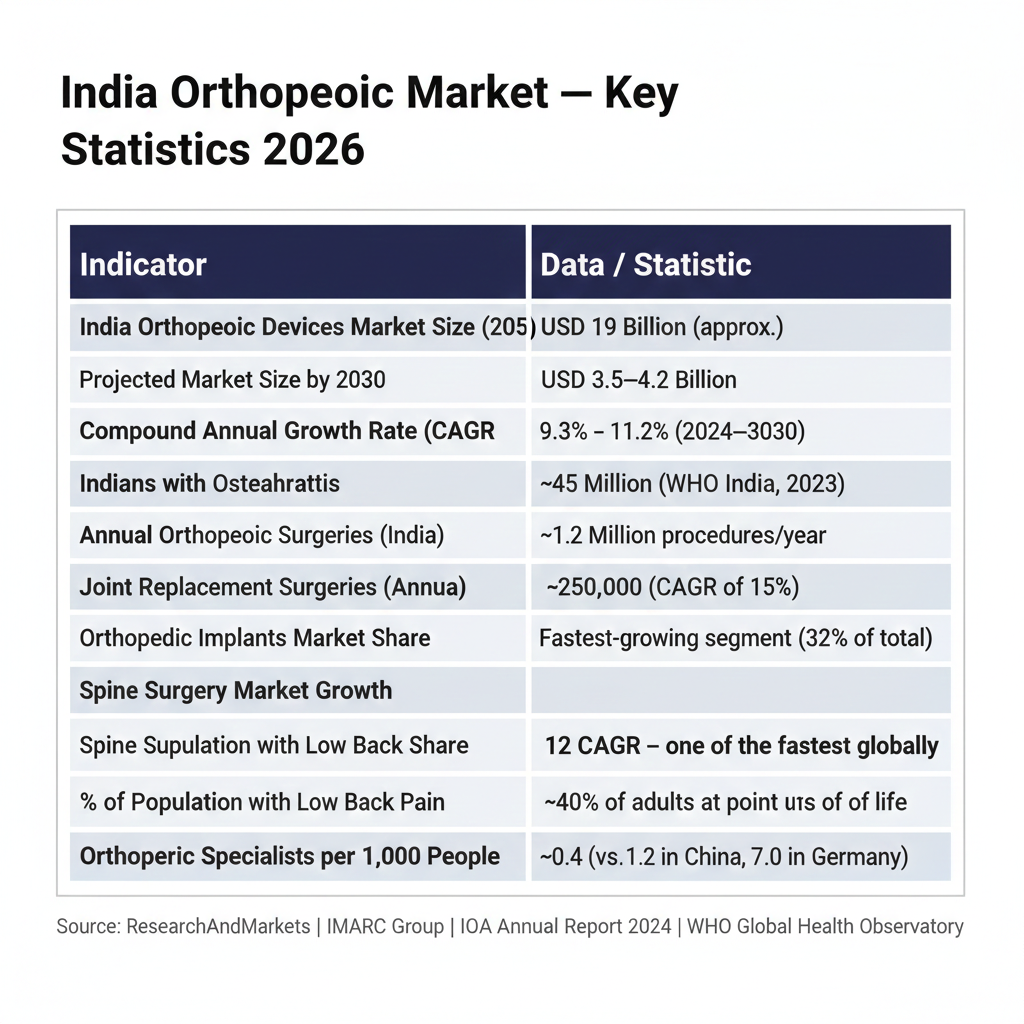
Here is a statistical snapshot of the current landscape, drawn from multiple independent research sources:
The Real Orthopedic Health Burden: Conditions Driving Demand
Behind every market statistic is a patient. Knowledge of the burden of disease enables policymakers, medical professionals, and patients to make the right priorities.
Osteoarthritis: The Silent Epidemic
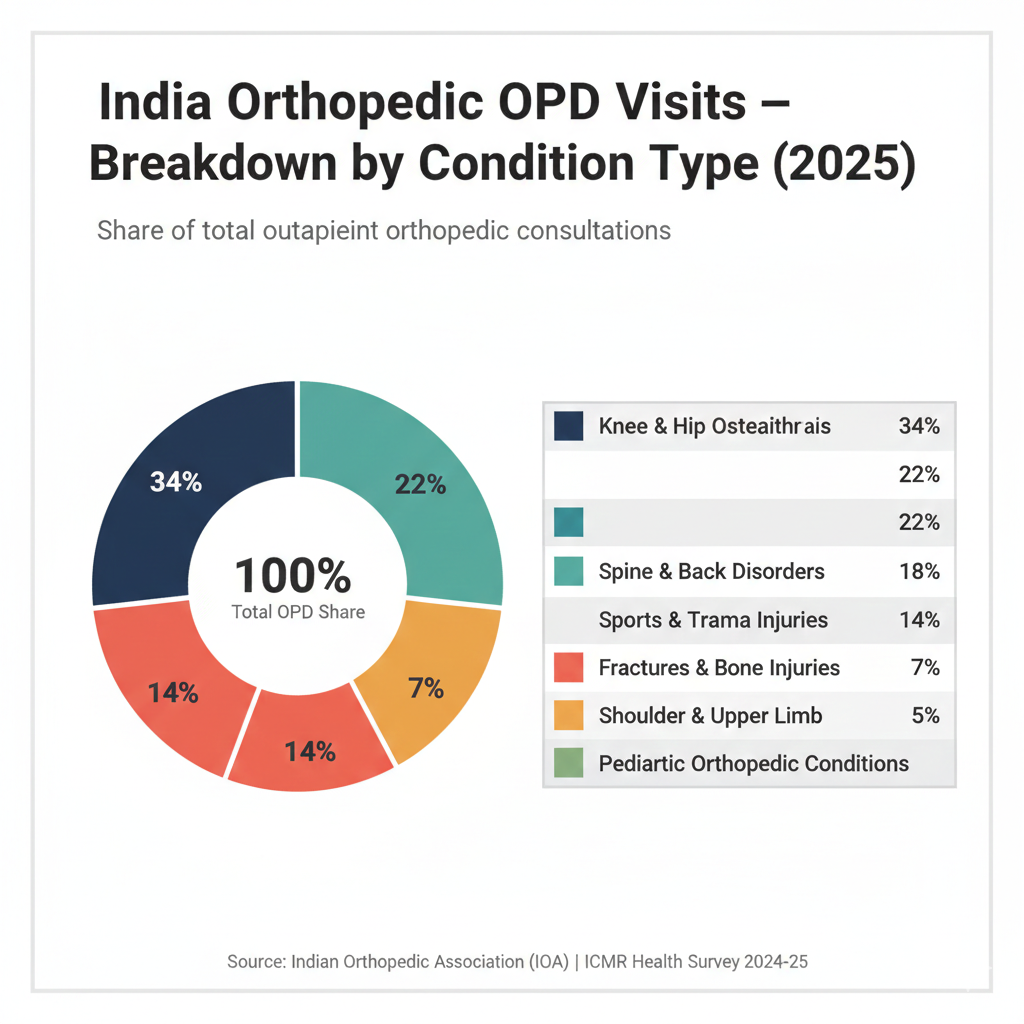
In India, osteoarthritis (OA) is the most common reason for orthopedic consultations.
It is being felt in India; in the case of OA of the knee, it used to impact 45 million Indians and is also now being diagnosed increasingly for people who are in their 40s rather than geriatric age.
The onset is accelerated by urban sedentary lifestyles, obesity, and vitamin D deficiency. The magnitude of this crisis is represented by the fact that knee replacement surgeries in India have increased at a rate of more than 15% every year.
Sports & Trauma Injuries
The increase in the number of the young population and the growth of organized sports in India have resulted in a corresponding increase in the number of orthopedic injuries due to trauma. That’s why sports injury treatment or trauma care surgery is now an important factor in the Indian orthopedic market.
The current IOA 2024 data shows an almost 18% increase in ACL tears, rotator cuff injuries, stress fractures, and meniscal damage that constitute about 18% of all orthopedic OPD visits in urban hospitals.
Spine Disorders: An Underreported Crisis
Clinically significant lower back pain will happen to around 40% of adults in India.
Cervical spondylosis: wearing out of the neck in a group of 20 million people; the risk of it is mainly occupational (as with drivers, desk workers, and construction workers).
The Indian spine surgery industry has a CAGR of 12%, which ranks as one of the fastest-growing in the Asia-Pacific region.
Osteoporosis and Fragility Fractures
Fragility fractures are the orthopedic crisis in sight, as the projected population of over 60 individuals in India will increase to 340 million by 2050 (UNFPA India).
India is still experiencing a high mortality rate of hip fractures, with the average mortality rate of patients above the age of 65 years being 20% within one year of hip fracture.
There is always a lack of investment in prevention of orthopedic activities like DEXA scans and fall prevention programs.
Orthopedic Care in Kolkata and Salt Lake: A Regional Perspective
Kolkata hosts the biggest medical city of Eastern India, and in this developing city, one specific locality (Salt Lake Bidhannagar) has emerged as a high-density healthcare zone for the past 10 years
The following is what the patients and caregivers in the area should know about the orthopedic infrastructures within the area:
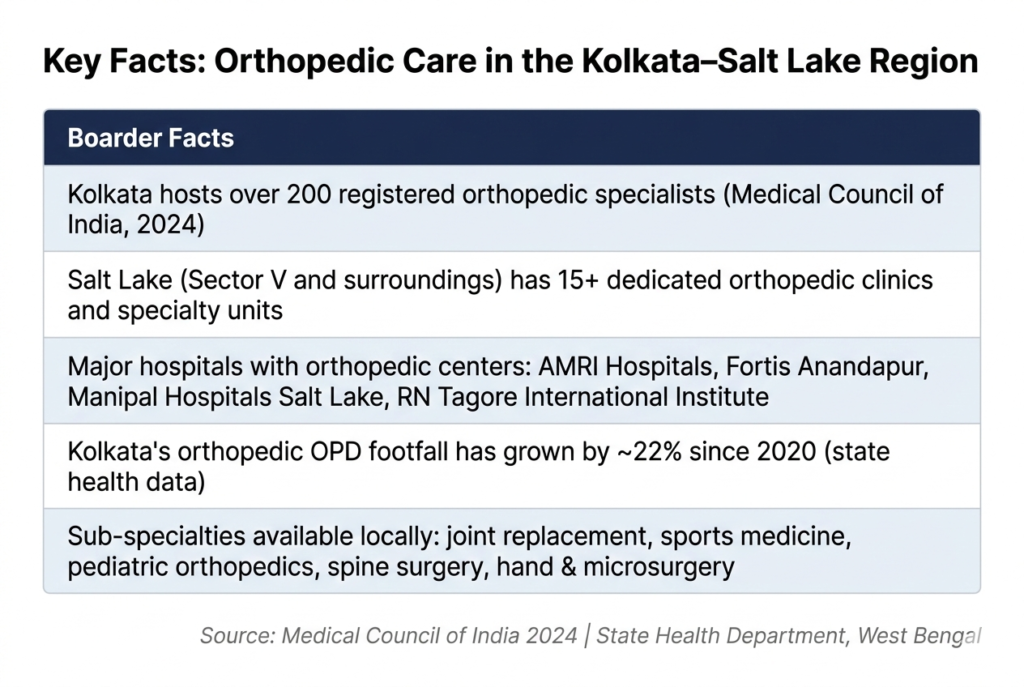
Most orthopedic surgeons in Salt Lake and general orthopedic doctors are different in regard to subspecialization.
In case of complicated surgery (revision joint replacement, deformity correction, or minimally invasive spine surgery), one should deal with a surgeon who has specialized training.
Ensure that the surgeon has done fellowship training and has done a large number of such surgeries.
How to Choose the Best Orthopedic Doctor in Kolkata
The patients are to pay attention to the following points in selecting an orthopedic doctor in Kolkata:
- Board certification and subspecialization in the field of interest (knee, spine, shoulder, etc.).
- Case volume per year of the specific procedure required—the more frequent, the lower the complication rate.
- Hospital affiliation—tertiary care hospitals that have orthopedic theaters and an ICU are needed for complex cases.
- Open outcome information—infection rates, revision rate, functional recovery scores.
- Intervention of a multidisciplinary team: physiotherapy, pain management, and anesthesiology.
- Availability of current implantation technology and the system of navigation-assisted surgery.
Orthopedic Myths vs. Evidence-Based Facts
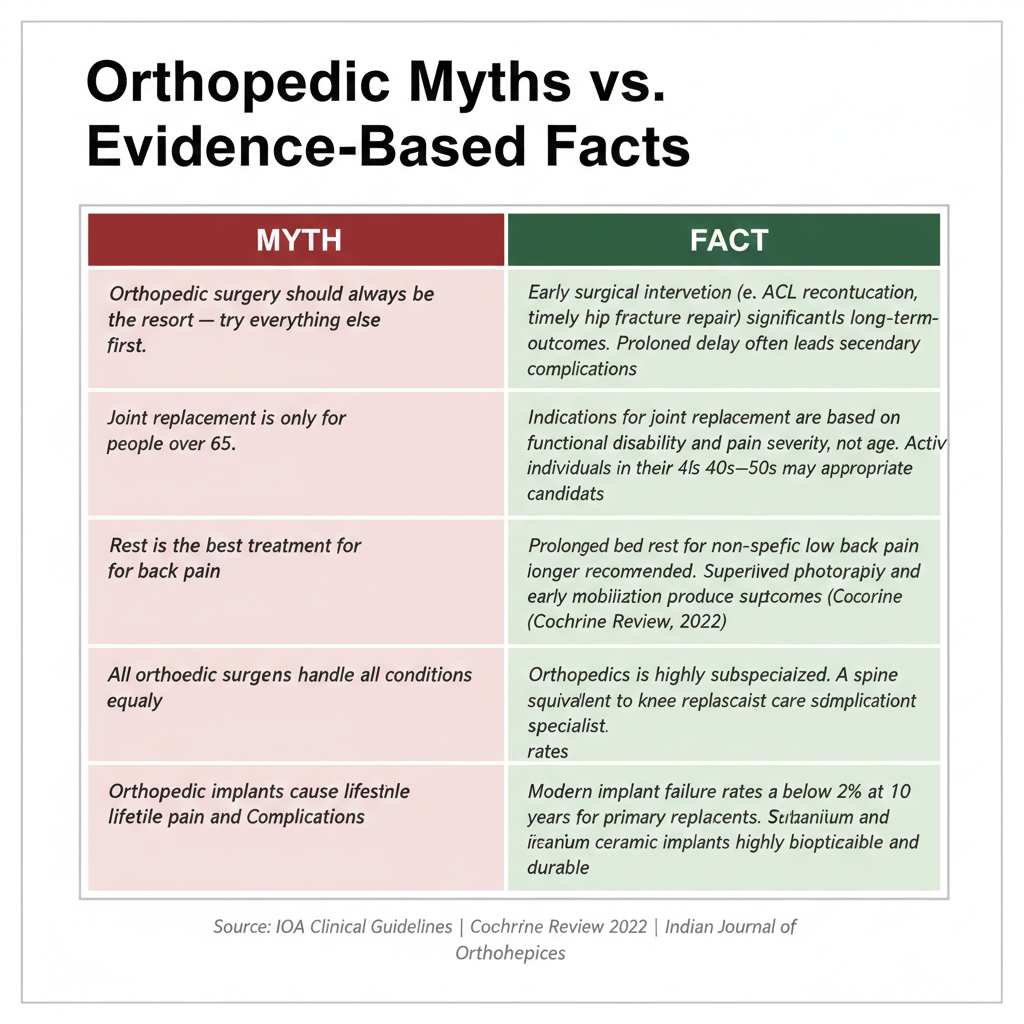
Misperceptions regarding orthopedic diseases threaten the promptness of care.
The consequences and the unjustified quality of life decrement. The following are the most widespread myths—and what clinical evidence in fact indicates.
Read our article: Orthopedic Myths vs. Facts (With Doctor-Verified Research)
Actionable Orthopedic Health Guidance for 2026
For Patients
- Do not self-diagnose using generic internet symptom checkers. Musculoskeletal pain can have multiple overlapping causes requiring physical examination and imaging.
- If knee or hip pain interferes with daily activities for more than 6 weeks despite conservative management, consult an orthopedic specialist — not a general physician.
- Bone density (DEXA scan) screening is recommended for all women over 50 and men over 65 years old or younger with risk factors.
- The fact that an orthopedic surgeon is not needed implies that physiotherapy should not be done; this is a clinical necessity. Make sure that in your post-operative plan, there is supervised rehabilitation.
- Before any elective orthopedic surgery, seek the second opinion of a subspecialist. Complex surgeries deserve dual expert validation.
For Caregivers of Elderly Patients
- Hip fractures in the elderly require surgical intervention within 24–48 hours for optimal outcomes. Do not delay hospital admission waiting for ‘natural recovery.’
- Fall prevention programs — including home hazard assessment, medication review, and vitamin D supplementation — reduce fracture risk by 30–40%.
For Healthcare Investors & Decision-Makers
- They include the orthopedic braces and orthopedic supports segment in India with a CAGR of 13.5%—the highest in the orthopedic devices market (IMARC Group, 2025). Preventive orthopedics products are a poorly served avenue of growth.
- Tier 2 and Tier 3 cities are the future. The number of orthopedic specialists (0.15 per 100,000 residents) is so low that Metro assigns the concentration a very low rating that creates a care gap and offers an opportunity to invest.
Frequently Asked Questions (FAQs)
Q1: What is the difference between an orthopedic surgeon and an orthopedic doctor?
An orthopedic physician is a medical physician who works in treating the problems related to bones, joints, muscles, and tendons. They identify such issues, and they cure them using drugs, therapy, or any other non-surgical methods.
The terms “orthopedic surgeons” and “orthopedic doctors” are used interchangeably, although not all orthopedic doctors are surgeons. An orthopedic surgeon has been trained to do surgery when it is required.
Moreover, both these professionals will probably go for an MS in orthopedics after MDs from India, and the surgeons are typically trained by a fellowship in subspecialization, such as joint replacement, spine surgery, or even sports medicine.
Q2: How do I find the best orthopedic surgeon in Salt Lake, Kolkata?
Eligibility: Select a board-certified MS (Ortho) or DNB (Ortho) and fellowship training with your problem, knee, spine, shoulder, etc.
Preferably, more pans should be given to surgeons practicing in NABH-accredited Salt Lake hospitals, who have individual orthopedic surgery OTs.
Practo patient reviews and Google reviews could be useful as auxiliary objects, but not in place of professional validation.
Q3: What conditions require immediate orthopedic consultation?
Acute joint dislocation or fracture (the former should be stabilized) – urgent orthopedic consultation is required; acute deficiency of the capacity to support oneself in a limb; and acute deficiency of nerve activity (i.e., unconsciousness, pins and needles, or weakness) in a limb.
Indications of a required non-urgent and yet timely consultation should be persistent joint pain of over 6 weeks, considerable movement restriction, or the existence of a bone tumor.
Q4: What is the recovery time after a total knee replacement in India?
The majority of the patients start to walk with the help of aids within 24-48 hours of having a total knee replacement.
The discharge normally occurs between 3 and 5 days. Physiotherapy proceeds with supervision for 68 weeks after the operation. The period of recovery is considerably 6 to 8 weeks, and full functional recovery can be achieved in 3 to 6 months.
Low-impact exercise (swimming or bicycling) can be resumed 4 months later. High-impact sports should not be applied to normal total knee implants.
Conclusion: Orthopedic Health in India Demands Better Answers
India is at a critical junction in orthopedic medical services. Its market size is 3.5 billion USD and more. Now it is expanding rapidly because of the aging population and the change in lifestyles, as well as surgeries, which are on the rise.
But to most inhabitants of the 1.4 billion people of India, including millions in Kolkata and its Salt Lake district, the difference between available care and accessible care is still a reality.
Dr. Aditya Vasudev, an orthopedic surgeon in Kolkata, is one such member of a new generation of healthcare practitioners who specialize based on the evidence-based nature of care and the most current approaches to surgery.
Learn more about Dr. Aditya Vasudev.
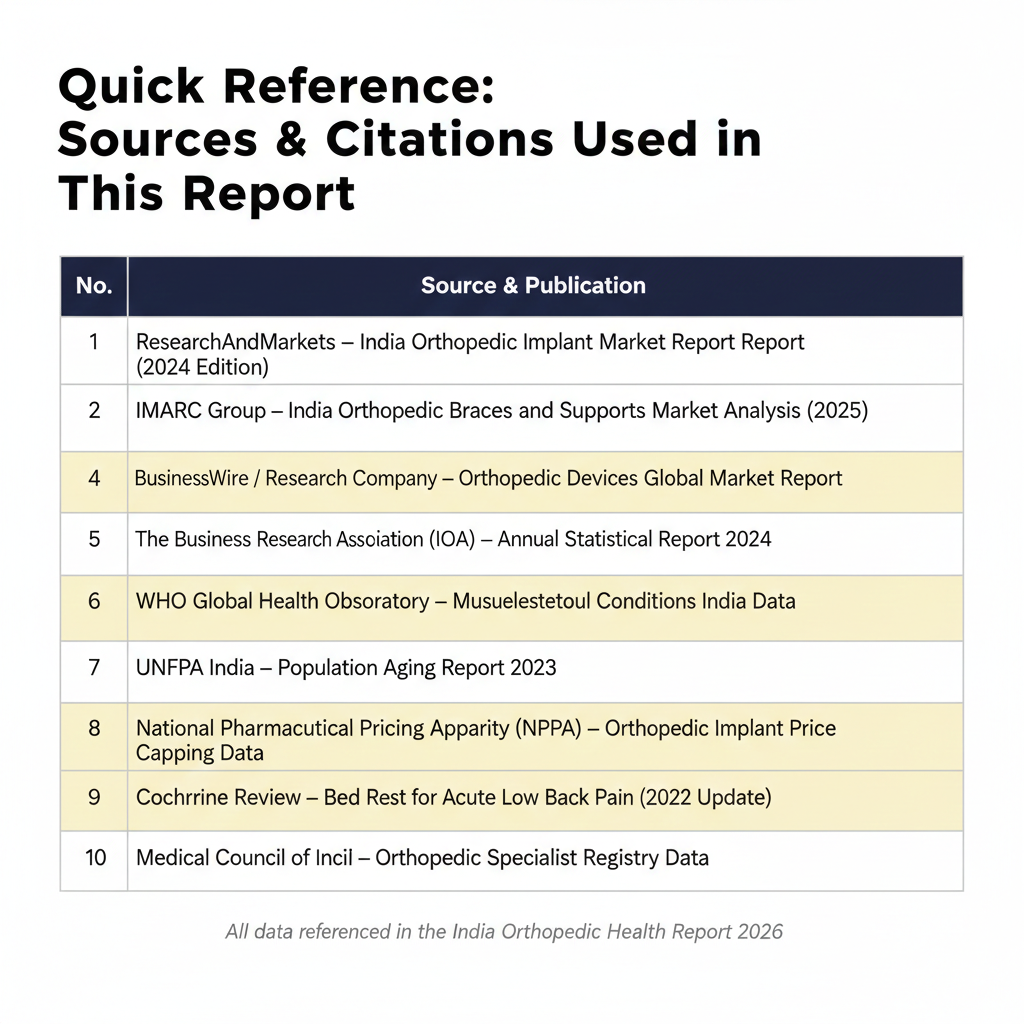
And if you’d like to learn more about the data & resources, here’s a snapshot of our source:
Now I’d like to hear from you: What’s your #1 takeaway from this report?
Or maybe you have a question about something that you read.
Either way, I’d like to hear what you have to say. So go ahead and leave a comment below right now.